September 25, 2017
On the 25th day of the walk, I woke early and left Villar de Mazarife quickly. In a couple hours, I had gone 14 kilometers and the sun was only starting to come into its own as I ducked into a bar for coffee and a piece of cake. I saw a few people I recognized, but I was alone.
On the Camino, the cycles of solitude and company are striking. It’s the solitude I study closest: I came here alone. I’m single. I aspire to independence. Being alone is comfortable and I am good at it. I’m used to it. So sometimes–even often–the solitude is delicious. It’s like I dropped of the face of the earth and have found another world that only I know, that I am free to wander and create. Or like I am playing hide and seek and found the best spot.
But hide and seek is about being found.
And so, when no one finds me for a while, the solitude turns into loneliness. And sometimes–even often–I am afraid to intrude in others’ lives so I just walk fast and wish I’d slow down and connect with someone, but don’t.
That is when being alone goes rancid.
The solitude in the coffee shop on this day wasn’t delicious or rancid, but somewhere in between. I don’t know. I didn’t overthink it. I just wanted coffee.
But in came two women I met back at San Nicolas, the Italian albergue with the foot washing. Sarah and Stacey and I greeted each other, and just like that (how quickly things change), we were out of the shop and walking together.
We stopped to pet a floppy, friendly dog. The dog ran to its owner, an old man standing in front of his garage. He asked where we were from, and we said Australia and the US, and he invited us into his house.
“Mira, mira!” he said. (Look, look.)
He showed us a heavy wooden trunk full of postcards and pins and paraphanalia from all over the world: Italy, France, Australia, Canada, Greece, Oklahoma. These were talismans from the pilgrims who had passed through town and befriended him; he kept every one.
“Espera, espera,” he said when we had marveled appropriately at everything in the box. (Wait, wait.)
He went in to his kitchen and came back with great bunches of grapes. The grapes were small, delicate, sticky, and sweet.
“Buen Camino,” he said, and waved us onto the street.
Hours and hours passed. The sun was warm, and the breeze was cool. The Meseta ended a day or two ago, but with reluctance. It kept trying to return to us, to stifle the new slopes with additional dosages of flatness and brown. I had heard that the world’s largest corn maze was in this place on some vast expanse. We didn’t find it.
The path was red dirt.
Conversation rolled between Sarah, Stacey, and me, and we passed people and people passed us.
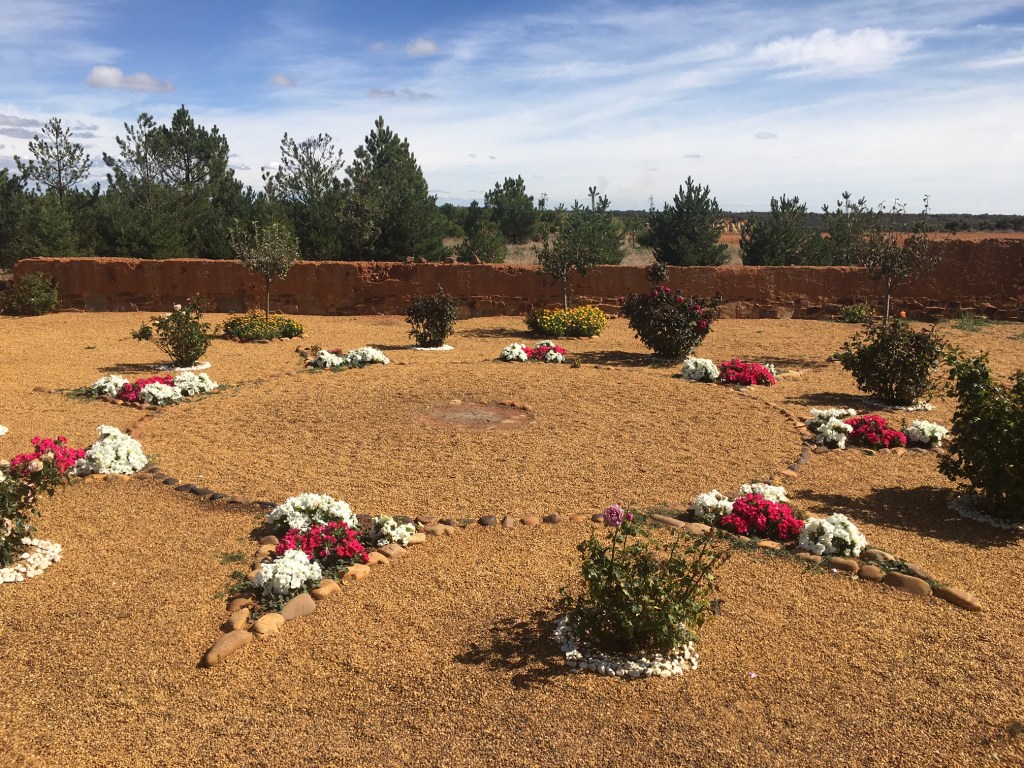
At the top of a gradual rise, sometime in the early afternoon, we came upon La Casa de los Dioses, a “pilgrim paradise” of hammocks, a labyrinth, and food. Food, food food, all free: goji berries. Banana bread. Kiwis. Nutella. Peanut butter. Coffee. Almond milk. Spirulena. Things that are too expensive and rare for me to eat daily.
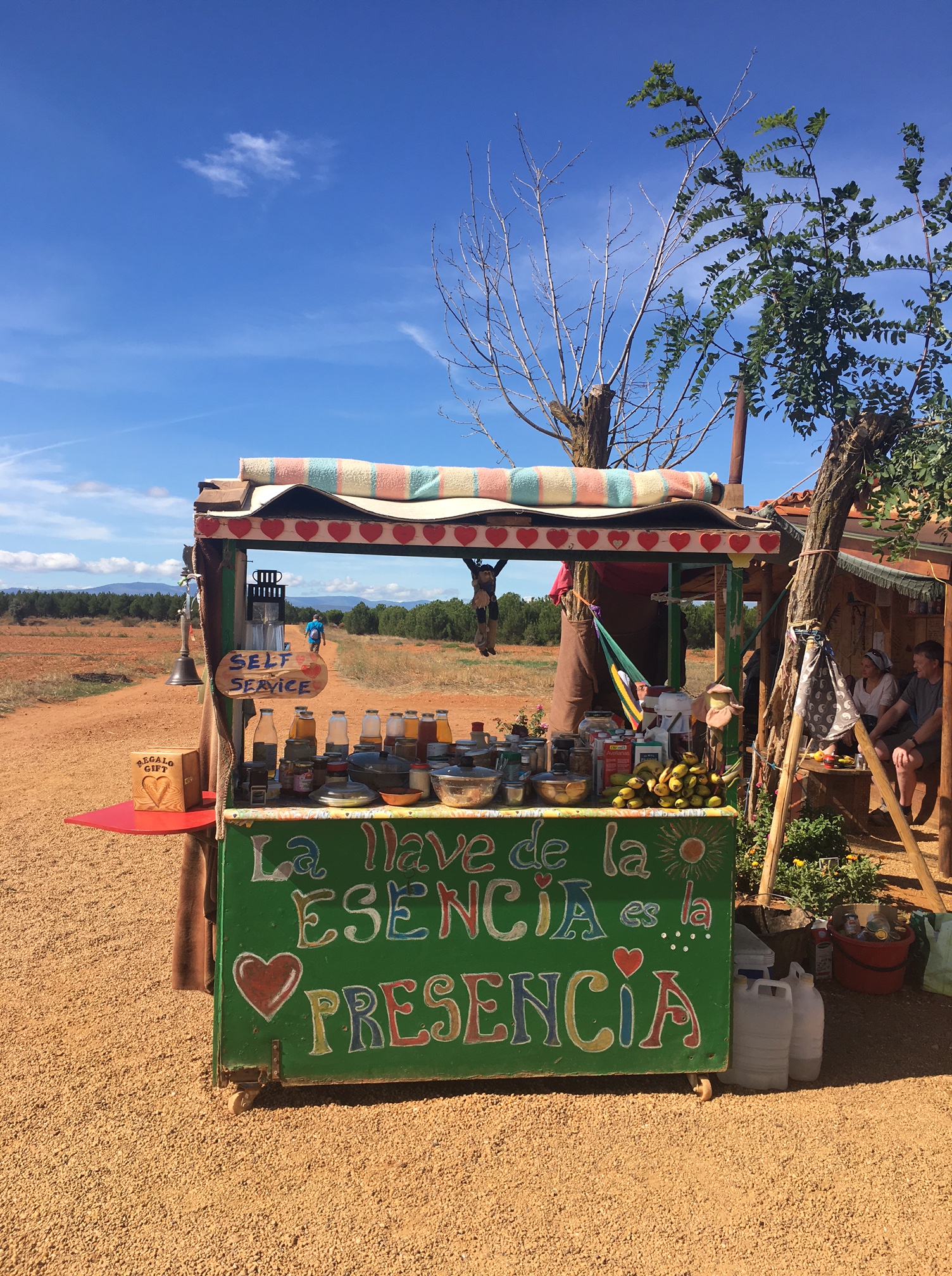
My guidebook had told me that here, if I made the time, David, the owner, would “reveal to me my essential nature.” But it only took a moment, because the answer was painted on the food shack: “La llave de la esencia es la presencia.”
(The key to your essence is your presence.)
I ate a kiwi like it was an apple and I sprawled on a sheet that was held down by rocks. The sun was hot. The sky was blue. Flies kept landing on my face. I understood that back in Washington, fall was falling, and I was thankful for a day with heat and light.
We reached the town of Astorga, once a major Roman settlement, and after the check-in, shower, and laundry, I walked off alone to see the sights, starting with the cloaca Romana, the Roman sewer.
After the sewer, I proceeded to the old forum. I was gawking through the metal gate at the excavated walls and corridors and here I thought I was alone again with the ruins. And since I’d been given Sarah and Stacey, I was happy.
I was struggling to get the gist of a plaque to learn more about the forum when three people approached it and I backed away to make room for them. There was a man and woman, clearly not pilgrims by their denim shorts, and a wiry, tan man with a bushy white beard and deep wrinkles around his eyes. He was dressed like a cowboy trying to pass for a Coachella attendee: plaid shirt, big belt buckle, a felt hat with dozens of craft store feathers stuck in the brim, and a big leather fringed vest. He pointed at me.
“Hablas Español?” he asked.
“No mucho,” I said.
“Ven,” he said, beckoning me closer. The couple looked like someone had just trapped them, now that I saw them closer.
“A tour,” said the wife in stiff English. “He gives a tour.”
The tour guide proceeded, and what I’ll relay is about sixty percent of what he said, which is about the amount of his Spanish I could understand: “Pliny the Younger was once here. Pontius Pilate was here when he was six. Translate,” he said to me. He nodded at the jean shorts. “Those two don’t speak Spanish.”
“Where are you from?” I asked the man in English.
“Belgium,” said the man. The tour guide was impatient.
“Pontius Pilate…” he prompted.
“Si, si. Uh, Pontius Pilate was here when he was six.”
The couple didn’t understand much English either, but after some murmuring they agreed on what I was saying, and looked and me and said, “Yes, okay.”
This trial run concluded, the tour officially commenced. The guide called himself Amador. Lover.
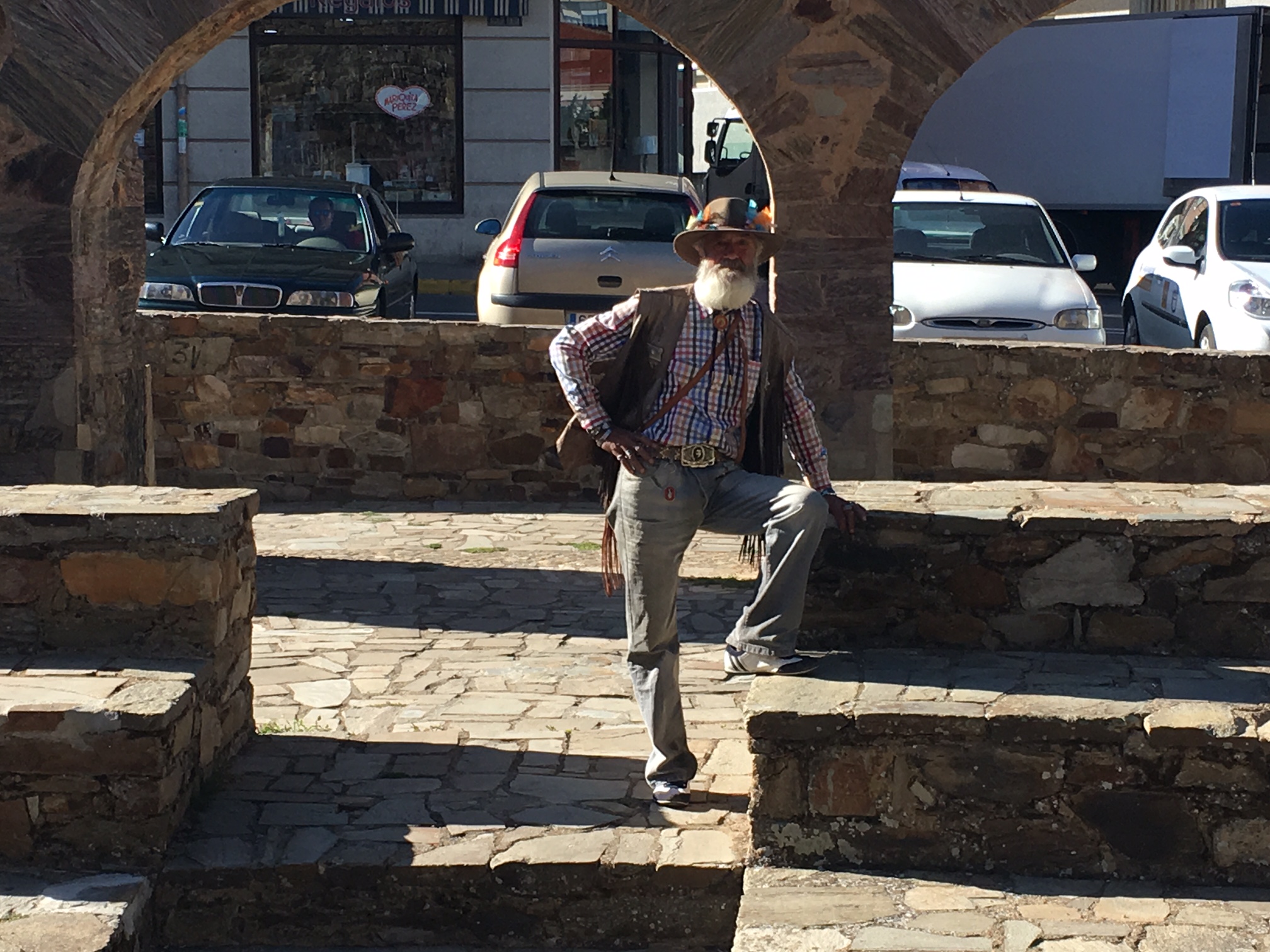
I don’t know if he was an official tour guide. He had no name tag, no business card, and nothing about his appearance to suggest that he was anything other than an eccentric wandering the streets. But I wanted to see the city, and Amador was friendly and spoke with small words and there were two Belgians with us, and so I went.
Amador showed us things I never would have known to look for. He showed us sculptures done by a locally prominent artist he once studied under. He taught us that Astorga was a walled city and there were once three gates and he showed us where Napoleon destroyed one of them. He showed us the chocolate factory and told us it was once a hospital. He showed us the cathedral and told us a story of how the statue on one of the towers fell and killed someone once, and also how the central arch on Gaudi’s Bishop’s Palace collapsed six times before they got it to stay put, and also, Gaudi had wanted another story added to the top but didn’t get his way. He showed us the old Roman theatre and I told him I loved Roman things, and he found a loose rock on a seat and gave it to me.
“This is 2000 years old. Keep it, or place it at the Cruz de Ferro,” he said.
Locals passed our little group and smiled at Amador and shook his hand. We went to La Posada Real, where kings and politicians have stayed. He waved to the doorman who waved back, and we walked right in. I hadn’t been in fancy lodging in a long time and I marveled at the chairs with cushions and the fine china and dust-free art. He showed us the garden and told us to take photos of the cathedral which was just visible through the trees. He showed us a room where an important counsel met, and an old perambulator, and a card table that was unique.
He took us to the cathedral and sent me in to get my pilgrim passport stamped with the likeness of St. James in pilgrim garb. He took us to a Benedictine convent and a park where Holy Week is celebrated. He pointed out plaques on the sides of buildings noting the birthplaces of poets and painters.
And when I had to leave to meet Sarah and Stacey for dinner, I dug for the obligatory few Euros I knew he was after with this tour of his, but he pushed my hand away.
“No, no! It’s a free tour!”
“Oh. Really?”
“Yes! Now you know more about Astorga than 99 percent of Astorgans, and this city has more culture than any on the Camino.”
“So every day you just take pilgrims and show them the city?”
“Yes!”
“Amador, thank you!”
It was a day of generosity.
That night we cooked dinner together in a tiny kitchen in the albergue. The scene was typical: crowded and friendly with not enough sharp knives to go around. The sunset matched the geraniums. Everyone had cheap unmarked bottles of wine lying around, and we drank from and cooked with whichever bottles were nearest. We laughed and talked in all languages and feasted on cheap pasta.
I don’t want this to come off as trite and idyllic, like a scene from a calendar. It’s just that this was a night when the company was good and welcome and all lit up, and that lit up everything I saw in a special way that had never been and won’t be again.
 Evergreen Editing
Leave a comment